
January offers exceptional travel opportunities that savvy travelers shouldn’t overlook. While most people recover from holiday expenses and endure winter gloom, this month delivers fewer crowds, significantly lower prices, and destinations at their absolute seasonal peak. Whether you’re seeking summer sun in the Southern Hemisphere, tropical paradises during their dry season, or mild winter warmth without extreme temperatures, these 15 destinations offer the year’s best value and experiences.
15. Seville, Spain: European Winter Without the Chill

Average Temperature: 61°F (16°C)
While Northern Europe shivers under gray skies, Seville enjoys early spring-like warmth that makes January ideal for experiencing authentic Andalusian culture. You’ll need only a light jacket as you explore centuries-old streets, and outdoor cafes remain bustling from 10 a.m. until late evening.
Seville Cathedral, the world’s largest Gothic cathedral, dominates the skyline with its massive structure. Inside, intricate chapels and Christopher Columbus’s tomb await exploration. Climb the Giralda tower’s 35 ramps—originally a 12th-century minaret—for sweeping views of terracotta rooftops extending to the Guadalquivir River. The adjacent Royal Alcázar palace complex blends Moorish arches, Gothic vaults, Renaissance galleries, and Baroque details. Its extensive gardens are particularly pleasant in January without summer’s oppressive heat.
The Santa Cruz quarter epitomizes Seville’s charm. Narrow cobblestone alleys wind between whitewashed buildings draped in bougainvillea. Plaza de España, a magnificent semicircular complex built for the 1929 World’s Fair, features tiled alcoves representing Spain’s provinces, ornate bridges, and a canal for rowboat rides. Granada’s Alhambra Palace, a two-hour drive away, ranks among Europe’s most spectacular Moorish monuments—book tickets weeks in advance as they sell out quickly.
Embrace Seville’s dining rhythm: lunch around 2 p.m. or later, dinner rarely before 9 p.m. In Triana, the riverside neighborhood famous for ceramics and flamenco, order salmorejo (a thick tomato-bread soup), fried fish, and Iberian ham, paired with local sherry or rebujito (sherry mixed with lemon soda).
January advantage: Mild temperatures perfect for walking, fewer tourists than spring/fall, post-holiday price drops, and comfortable outdoor exploration.
14. South Africa: Summer Safari Season

Average Temperature: 84°F (29°C)
January marks peak Southern Hemisphere summer when wildlife safaris, beaches, and wine country converge perfectly. South Africa offers astonishing diversity—within hours, you transition from urban exploration to wildlife encounters to coastal relaxation.
Cape Town captivates with Table Mountain’s cable car views and Camps Bay’s white-sand Atlantic beaches backed by the Twelve Apostles mountains. The Cape Winelands around Stellenbosch and Franschhoek offer relaxed outdoor tastings with mountain backdrops, gourmet picnic lunches under oak trees, and passionate winemakers eager to share their craft.
Kruger National Park delivers Africa’s premier safari experience. The “Big Five”—lions, leopards, elephants, Cape buffalo, and rhinoceros—are the most sought-after animals, originally named for being the five most dangerous to hunt on foot. January’s rainy season creates lush landscapes and excellent birdwatching, though tall grass challenges spotting. Private reserves bordering Kruger employ professional trackers who use radio communication to locate animals, guaranteeing close encounters with wildlife at higher prices than Kruger’s self-drive camps.
Morning game drives start before dawn when predators are most active. Return to camp during midday heat, then venture out at dusk when animals emerge to drink. Even veteran safari-goers thrill at watching lions on a kill, spotting leopards in trees, or encountering elephant bulls crossing roads meters away.
The Garden Route along the southern coast connects Knysna’s lagoon flanked by sandstone cliffs, Plettenberg Bay’s stunning beaches, and Tsitsikamma National Park’s Storms River suspension bridge over ancient forest gorges.
January advantage: Peak summer weather, reduced crowds after mid-January holidays, more affordable lodge rates than dry season (June-October), pleasant wine country temperatures.
13. Aruba: Caribbean Sunshine Guaranteed

Average Temperature: 82°F (28°C)
Aruba sits outside the Caribbean hurricane belt 15 miles north of Venezuela, guaranteeing year-round sunshine and calm seas. Eagle Beach’s powder-white sand, turquoise water, and iconic wind-bent divi-divi trees consistently rank it among the world’s finest. Palm Beach offers water sports and beachfront restaurants with gentle waves perfect for swimming.
Arikok National Park covers nearly 20% of the island with desert landscapes, natural pools carved into limestone, and caves containing indigenous Arawak paintings. The Antilla shipwreck, a 400-foot German freighter intentionally sunk in 1940, now teems with marine life—tropical fish, barracuda, and lobsters inhabit the coral-encrusted wreck accessible to snorkelers and divers.
Downtown Oranjestad features colorful Dutch colonial architecture with pastel buildings housing duty-free shops. Constant trade winds make Aruba ideal for windsurfing and kitesurfing. Local cuisine blends Dutch, Caribbean, and Latin American influences—try keshi yena (stuffed cheese) and fresh catch grilled with Aruban spices.
January advantage: Guaranteed sunshine outside the hurricane belt, calm seas, peak season atmosphere, and reliable weather for water activities.
12. Morocco: Cultural Immersion in Perfect Weather

Average Temperature: 68°F (20°C)
January brings Morocco’s ideal climate—warm sunny days, cool nights, and no summer’s oppressive heat. Marrakech’s ancient medina pulses with energy around Jemaa el-Fnaa square, where snake charmers, storytellers, and food stalls create sensory overload. Navigate the souks’ maze-like alleys selling spices, carpets, leather goods, and traditional crafts.
Blue-painted Chefchaouen nestles in the Rif Mountains, its azure walls and doors creating an otherworldly atmosphere. Fes boasts the world’s oldest operating university and medieval medinas where leather tanners still use centuries-old techniques. The Chouara tannery’s colorful dye pits create Morocco’s most photographed scene.
Sahara Desert excursions from Merzouga or Zagora offer camel treks into Erg Chebbi’s massive dunes. Watch sunset paint sand golden-red, spend nights in Berber camps under impossibly star-filled skies, and wake to sunrise over the desert. January’s clear skies and comfortable temperatures make desert camping ideal.
Coastal Essaouira provides Atlantic breezes, fresh seafood, and relaxed medina exploration. The Atlas Mountains reveal Berber villages clinging to terraced slopes, with the Toubkal region offering trekking opportunities. Traditional riads (restored houses with interior courtyards) provide authentic accommodation.
January advantage: Comfortable temperatures, avoiding summer heat, clear desert skies, pleasant mountain trekking, and fewer European tourists than peak season.
11. Dubai, UAE: Luxury Without the Heat

Average Temperature: 75°F (24°C)
Dubai’s winter transforms this desert metropolis, making outdoor exploration comfortable. Burj Khalifa’s observation deck on floors 124-125 offers world-record views from the planet’s tallest building (2,722 feet). Dubai Mall, among the world’s largest shopping centers, houses 1,200 stores plus the Dubai Aquarium with thousands of marine animals visible through a massive acrylic panel.
Traditional souks in Deira’s historic district contrast sharply with modern architecture. The Gold Souk displays elaborate jewelry in hundreds of shops, while the Spice Souk fills the air with saffron, cardamom, and frankincense aromas. Dubai Creek’s traditional abra water taxis ferry passengers between old and new Dubai for less than a dollar.
Desert safaris combine adventure and culture. Dune bashing in 4×4 vehicles thrills as drivers navigate steep sand slopes. Camel rides, sandboarding, and traditional activities lead to Bedouin-style camps serving Arabic mezze while belly dancers and fire performers entertain under the stars. Dubai Marina’s waterfront promenade showcases contemporary urban design with restaurants overlooking luxury yachts. Palm Jumeirah’s artificial island hosts luxury resorts, including Atlantis with its water park and aquarium.
January advantage: Comfortable 75°F temperatures, Dubai Shopping Festival discounts, outdoor activities viable all day, pleasant beach weather.
10. Galápagos Islands, Ecuador: Wildlife Wonderland

Average Temperature: 77°F (25°C)
January brings warm waters and peak wildlife activity to these volcanic islands. Giant Galápagos tortoises, some weighing 900 pounds and living over 100 years, roam freely across the islands. Blue-footed boobies perform elaborate courtship dances, lifting their distinctive turquoise feet to attract mates. Marine iguanas, the world’s only ocean-swimming lizards, sun themselves on black volcanic rocks after feeding on underwater algae.
Snorkel with playful California sea lions who dart and spin around swimmers. Sea turtles glide past while reef sharks patrol the shallows. Each island offers unique ecosystems: Santa Cruz hosts the Charles Darwin Research Station breeding endangered tortoises; Isabela features active volcanoes and flamingo lagoons; North Seymour presents close encounters with frigatebirds and land iguanas.
Professional naturalist guides lead all island visits, ensuring responsible wildlife encounters while explaining evolutionary adaptations that fascinated Darwin. Liveaboard cruises access remote islands unreachable by day trips, offering the most comprehensive experience. January’s warm water temperatures (72-77°F) make snorkeling comfortable without wetsuits.
January advantage: Warmest water temperatures, peak nesting season for various species, calmer seas, active wildlife behavior, green landscapes from the rainy season.
9. Costa Rica: Pura Vida in Dry Season

Average Temperature: 81°F (27°C)
Costa Rica’s Pacific coast enjoys peak dry season when “Pura Vida” (pure life) philosophy shines. Manuel Antonio National Park combines pristine white-sand beaches with rainforest trails teeming with three-toed sloths hanging motionless in trees, white-faced capuchin monkeys foraging in canopies, and scarlet macaws flying in pairs overhead.
Arenal Volcano’s perfect cone dominates the landscape near La Fortuna. Natural hot springs heated by volcanic activity create relaxation spots ranging from rustic river pools to luxury resort thermal baths. Zip-line canopy tours send adventurers flying through cloud forests on cables stretching between platforms. Hanging bridges allow slower-paced forest exploration at the treetop level.
Monteverde Cloud Forest Reserve’s misty forests harbor quetzals, hummingbirds, and over 400 bird species. Tortuguero National Park’s canals reveal caimans, river turtles, sloths, and howler monkeys during boat tours. Pacific surf towns like Tamarindo and Nosara attract wave riders with consistent breaks and warm water. Costa Rica protects 25% of its territory in national parks, creating extraordinary biodiversity.
January advantage: Peak dry season, minimal rain on the Pacific coast, excellent beach weather, optimal wildlife viewing, and comfortable temperatures for rainforest hiking.
8. Panama: Central America’s Hidden Gem

Average Temperature: 86°F (30°C)
Panama blends Caribbean and Pacific beaches, a cosmopolitan capital, indigenous cultures, and engineering marvels. Panama City’s gleaming skyline rivals Miami, while Casco Viejo’s colonial quarter features colorful Spanish buildings, rooftop bars, and historic churches. The Panama Canal’s Miraflores Locks showcase massive container ships navigating the engineering masterpiece connecting oceans—watching 1,000-foot vessels rise and lower in lock chambers impresses even casual observers.
San Blas Islands, an archipelago of 365 islands managed by indigenous Guna people, offer pristine Caribbean beauty. White-sand islands ringed by palm trees and coral reefs provide snorkeling, kayaking, and immersion in Guna culture. Most islands have basic accommodations; some offer day trips from Panama City.
Bocas del Toro archipelago delivers a laid-back island atmosphere with reggae music, colorful wooden buildings, and exceptional marine life. Dive sites reveal sea turtles, eagle rays, and healthy coral reefs. Red Frog Beach hosts tiny poison dart frogs in its jungle. Boquete’s highland climate attracts coffee enthusiasts touring plantations and hiking trails with volcano views. Panama’s official currency is the US dollar, simplifying transactions.
January advantage: Dry season with minimal rainfall, comfortable humidity, optimal beach and snorkeling conditions, pleasant highland temperatures.
7. Rio de Janeiro, Brazil: Midsummer Carnival Energy

Average Temperature: 84°F (29°C)
Rio’s midsummer peaks in January as the city builds toward February Carnival. Copacabana and Ipanema beaches define Rio’s legendary beach culture—bronzed locals play futevôlei (foot volleyball), altinho (keepy-uppy), and samba. Beach vendors sell caipirinhas, acai bowls, and grilled cheese skewers.
Sugarloaf Mountain’s two-stage cable car delivers 360-degree views of Guanabara Bay, surrounding mountains, and urban sprawl. Christ the Redeemer statue atop Corcovado Mountain spreads arms over the city from an elevation of 2,300 feet. Santa Teresa neighborhood’s bohemian charm features colonial mansions converted to art studios, boutiques, and restaurants. Lapa’s nightlife erupts on weekends with samba clubs, street parties, and the iconic Arcos da Lapa (Carioca Aqueduct) hosting revelers.
Tijuca National Park, one of the world’s largest urban forests, offers hiking trails through Atlantic rainforest to waterfalls and viewpoints. Brazilian barbecue (churrascaria) serves endless meat skewers with feijoada (black bean stew with pork) on Saturdays. The Feira Hippie de Ipanema market showcases local crafts.
January advantage: Peak summer season, pre-Carnival excitement, perfect beach weather, extended daylight hours, vibrant street culture.
6. Thailand: Tropical Paradise Peak Season
Average Temperature: 86°F (30°C)
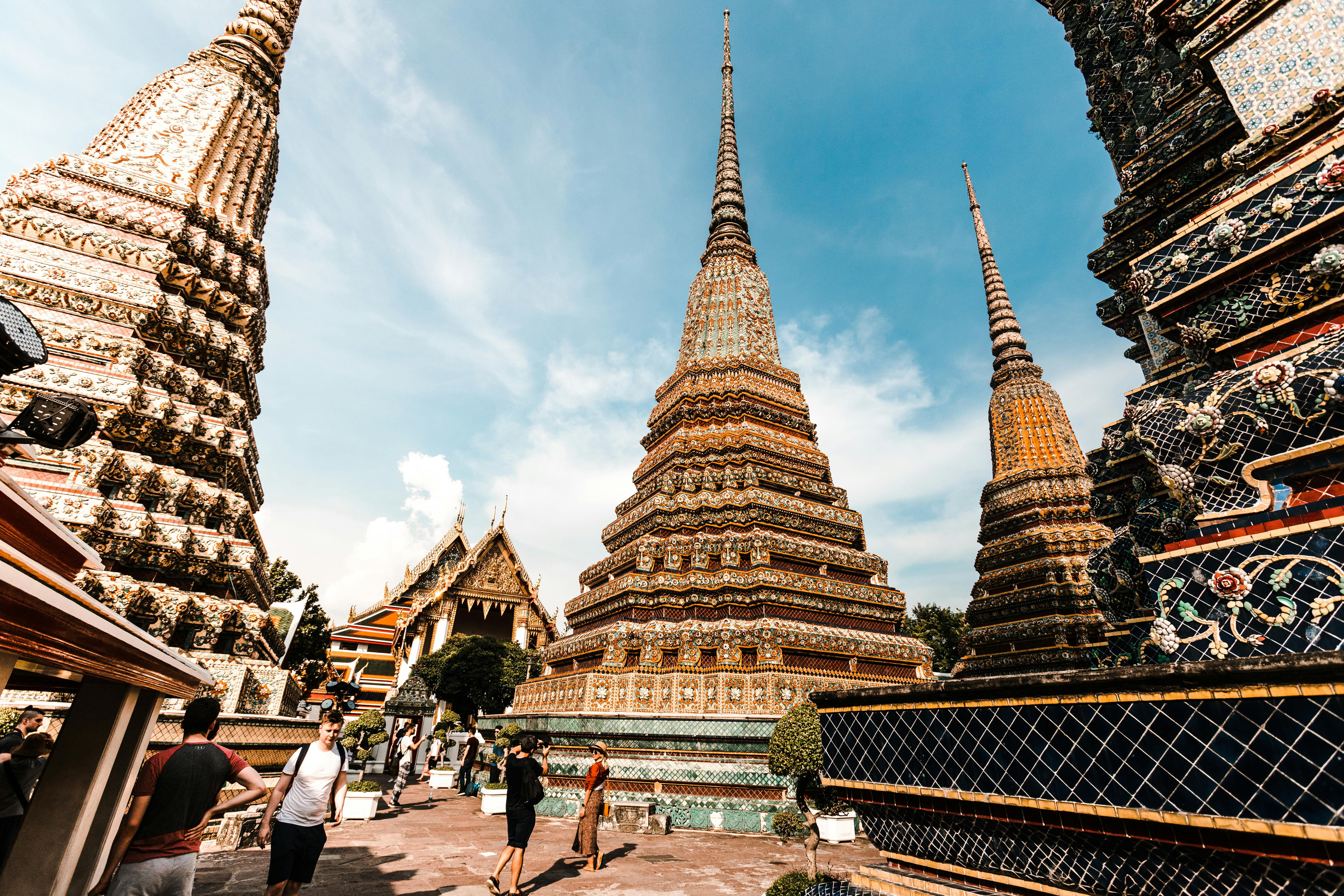
Thailand’s dry season creates perfect conditions nationwide. Bangkok combines the Grand Palace’s golden spires and emerald Buddha with Wat Pho’s massive reclining Buddha. Floating markets like Damnoen Saduak show traditional commerce from boats. Street food culture reigns supreme—pad thai from sidewalk vendors rivals expensive restaurants.
Chiang Mai’s 300+ Buddhist temples include Doi Suthep’s golden chedi overlooking the city. Night bazaars sell handicrafts while food stalls serve khao soi (northern curry noodle soup). Elephant sanctuaries provide ethical encounters—bathing and feeding rescued elephants without riding.
Southern islands offer diverse experiences: Phuket’s Patong Beach parties and Kata Beach families; Krabi’s Railay Beach, accessed only by boat with limestone cliffs perfect for rock climbing; Koh Phi Phi’s dramatic Maya Bay and Viking Cave; Koh Samui’s palm-fringed beaches and luxury resorts. Snorkeling and diving around the Similan Islands reveal some of the world’s healthiest coral reefs with whale sharks, manta rays, and sea turtles.
Thai massage, cooking classes, and Muay Thai training provide cultural immersion. January’s dry season guarantees calm seas and clear skies, perfect for island hopping.
January advantage: Optimal dry season, calm Andaman Sea, perfect beach weather, excellent visibility for diving, peak tourist services.
Get a Thailand eSIM to stay connected while traveling. 50GB high-speed data for just $7.90
5. Bali, Indonesia: Island of Gods

Average Temperature: 82°F (28°C)
Bali balances ancient Hindu traditions with world-class tourism. Ubud’s terraced rice paddies cascade down hillsides in brilliant green. The Sacred Monkey Forest hosts over 700 long-tailed macaques among ancient temples. Yoga studios and wellness retreats attract spiritual seekers, while traditional Balinese dance performances at Ubud Palace showcase elaborate costumes and gamelan music.
Seminyak and Canggu deliver beach club culture with infinity pools overlooking Indian Ocean sunsets. Surf breaks accommodate all levels—Kuta’s gentle waves for beginners, Uluwatu’s powerful barrels for experts. Tanah Lot temple perches dramatically on a rock formation surrounded by crashing waves, creating Bali’s most iconic sunset view.
Mount Batur’s pre-dawn trek rewards hikers with sunrise over the volcanic crater and neighboring Mount Agung. Traditional warungs (family restaurants) serve nasi goreng (fried rice), mie goreng (fried noodles), and satay at prices that make luxury affordable. Balinese Hindu ceremonies with colorful offerings appear daily in doorways and temples.
Tegallalang rice terraces near Ubud offer photo opportunities and traditional swing experiences. Tirta Empul temple’s holy springs, where devotees perform purification rituals, welcome respectful visitors.
January advantage: Peak dry season, minimal rainfall, comfortable humidity, optimal conditions for outdoor activities, best weather for temple visits.
4. Northern India: Golden Triangle Glory

Average Temperature: 68°F (20°C)
India’s Golden Triangle shines in January’s moderate temperatures. The Taj Mahal’s white marble changes color throughout the day—pink at sunrise, golden at sunset. This monument to love, built by Emperor Shah Jahan for his wife, took 22 years and 20,000 workers to complete. Agra Fort’s red sandstone walls enclose palaces, mosques, and courtyards, revealing Mughal architectural mastery.
Jaipur, the Pink City, earned its name from terracotta-colored buildings. Amber Fort’s hilltop position overlooks Maota Lake with elephant rides carrying tourists up the cobblestone path. City Palace blends Rajasthani and Mughal architecture with courtyards, gardens, and museums. Hawa Mahal’s honeycomb facade with 953 windows allowed royal women to observe street life unseen.
Delhi combines ancient and modern: Qutub Minar’s 240-foot tower dates to 1192; Red Fort’s massive walls protected Mughal emperors; Humayun’s Tomb inspired Taj Mahal’s design. Chandni Chowk’s chaotic market sells everything imaginable while street food vendors serve chaat, parathas, and jalebi.
Varanasi’s Ganges River ghats host dawn aarti ceremonies where priests perform fire rituals while pilgrims bathe in sacred waters, believing it cleanses karma. Rajasthan’s desert forts—Jaisalmer’s golden sandstone, Jodhpur’s towering Mehrangarh—transport visitors to maharaja eras. Indian cuisine varies dramatically: Delhi’s butter chicken, Rajasthan’s dal baati churma, South Indian dosas, and idlis.
January advantage: Comfortable sightseeing temperatures, clear skies, festival season including Makar Sankranti and Republic Day, and optimal conditions avoiding summer heat.
Get Indian eSIM to stay connected while traveling.
3. Oman: Arabian Peninsula’s Natural Wonder

Average Temperature: 75°F (24°C)
Oman blends dramatic landscapes with authentic Arabian culture minus Dubai’s glitz. Muscat’s Sultan Qaboos Grand Mosque accommodates 20,000 worshippers under a massive chandelier with 600,000 Swarovski crystals and the world’s second-largest hand-woven carpet. The architecture showcases intricate Islamic designs with white marble and towering minarets.
Wahiba Sands’ rolling orange dunes stretch endlessly. Bedouin camps offer overnight stays in traditional tents with Arabic coffee, dates, and stargazing. 4×4 vehicles navigate steep dunes, creating thrilling rides. Nizwa’s 17th-century fort dominates the old capital, while Friday’s livestock market maintains centuries-old trading traditions. The souk sells ornate khanjars (curved daggers), frankincense, and Omani silver jewelry.
Jebel Akhdar (Green Mountain) requires 4×4 access to reach villages clinging to terraced slopes growing pomegranates, roses, and walnuts. January brings cooler mountain temperatures, perfect for hiking. Wadi Shab, a dramatic canyon with turquoise pools, requires swimming through narrow passages to reach a hidden waterfall cave. Salalah’s southern coast provides a tropical contrast with monsoon-fed greenery unusual for Arabia.
Omani hospitality emphasizes welcoming guests with coffee and dates. Traditional cuisine includes shuwa (slow-roasted lamb), majboos (spiced rice with meat), and halwa (dense sweet).
January advantage: Perfect temperatures for outdoor activities, comfortable desert camping, accessible mountain roads, pleasant coastal weather.
2. Colombia: Caribbean Coast to Coffee Mountains

Average Temperature: 73°F (23°C)
Colombia’s improved security reveals extraordinary diversity. Cartagena’s UNESCO-listed walled city enchants with colorful colonial buildings, bougainvillea-draped balconies, and romantic plazas. Las Bovedas’ 23 arched vaults, built as military storage, now house artisan shops. Getsemaní neighborhood transforms from bohemian daytime into lively nightlife. Caribbean beaches on nearby Rosario Islands offer day trips for snorkeling and relaxation.
The Coffee Triangle (Zona Cafetera) encompasses emerald hillsides planted with coffee. Traditional fincas (farms) offer tours explaining coffee cultivation from cherry-picking to roasting. Stay in haciendas surrounded by plantations, hiking trails, and hummingbird-filled gardens. Salento’s colorful buildings and Cocora Valley’s towering wax palms (the world’s tallest palm species reaching 200 feet) create stunning landscapes.
Tayrona National Park combines pristine Caribbean beaches with coastal jungle. Trails lead through rainforest to secluded coves with turquoise water and white sand. Cabo San Juan’s palm-fringed beach offers rustic accommodation in hammocks or cabanas. Howler monkeys, iguanas, and tropical birds inhabit the jungle.
Medellín’s spring-like climate earned it the “City of Eternal Spring” nickname. Once notorious for violence, innovative urban transformation created cable cars connecting hillside communities, museums, and vibrant street art. Bogotá’s high-altitude capital (8,600 feet) requires acclimatization. The Gold Museum houses the world’s largest pre-Columbian gold collection with 55,000 pieces. Monserrate Mountain’s church overlooks the sprawling city.
Standard safety precautions remain essential: stay in tourist areas, use registered taxis or Uber, avoid displaying wealth, and travel during daylight when possible.
January advantage: Dry season across most regions, pleasant temperatures at varying altitudes, coffee harvest season, excellent Caribbean coast weather.
1. Patagonia (Argentina & Chile): The End of the World

Average Temperature: 60°F (16°C)
January unlocks Patagonia’s remote magnificence—this is the only season when this austere region fully opens. Stretching across southern Argentina and Chile, Patagonia encompasses glaciers calving into milky lakes, granite spires piercing clouds, windswept grasslands, and fjords cutting through mountains.
Chilean Patagonia’s Torres del Paine National Park ranks among the world’s premier trekking destinations. The W-trek (named for its map shape) takes 4-5 days, passing beneath the park’s iconic granite towers, along turquoise Lake Pehoé colored by glacial rock flour, past roaring waterfalls, and through valleys where guanacos (wild llama relatives) graze. The more challenging O-circuit extends 7-9 days, circling the entire mountain range.
Patagonian weather remains fiercely unpredictable even in midsummer. Clear skies, gale-force winds, torrential rain, and bitter cold can all occur within hours. Winds frequently exceed 60 mph, strong enough to knock hikers off balance. Pack quality rain gear, multiple layers, and prepare for sudden weather changes. Yet when the skies clear, the revealed landscape is incomparable.
Perito Moreno Glacier near El Calafate, Argentina, is one of Earth’s few advancing glaciers. From viewing platforms, witness building-sized ice blocks calving from the glacier’s 240-foot wall, crashing into Lake Argentino with thunderous roars. The glacier stretches three miles wide, its ancient blue ice shimmering under the sun. Boat tours approach close enough to feel the cold air radiating from the ice. Guided glacier hikes using crampons explore the ice surface, crevasses, and blue ice caves.
Los Glaciares National Park’s Fitz Roy region offers world-class trekking from El Chaltén, Argentina’s hiking capital. The Three Lakes Trail’s steep ascent rewards hikers with Laguna de los Tres viewpoint, where Fitz Roy’s jagged 11,171-foot peak reflects in glacial water—one of Earth’s most photographed mountain scenes. Torre Lake Trail provides equally spectacular views with less elevation gain.
Chilean Patagonia’s fjords enable boat-based exploration. Puerto Natales serves as the gateway to Torres del Paine and fjord cruises. Journeys to Negro Glacier pass icebergs floating like frozen sculptures. Extended multi-day cruises between Puerto Montt and Puerto Natales showcase the region’s waterways, though they require significant time and budget.
Ushuaia, Argentina, claims the title “world’s southernmost city” at 54° south latitude. The city’s mountain backdrop and winding Beagle Channel create dramatic settings. Channel cruises visit sea lion colonies and penguin rookeries. Tierra del Fuego National Park offers accessible hiking through southern beech forests. Some travelers use Ushuaia as a departure point for Antarctic cruises.
Wildlife encounters include guanacos herding across grasslands, Andean condors with 10-foot wingspans soaring on thermals, flamingos in remote lakes, and diverse seabirds. Argentina’s Valdés Peninsula hosts Southern right whales (June-December), elephant seals, and Magallanes penguins, though viewing seasons vary.
Infrastructure remains basic compared to established destinations. El Calafate and Puerto Natales offer quality hotels and restaurants, while El Chaltén caters specifically to trekkers. Vast distances require careful planning—places appearing close on maps may need full days driving on gravel roads. Domestic flights save time but add expense. Bus services connect major towns with infrequent schedules.
Local cuisine centers on cordero (lamb) and beef. Argentine restaurants serve massive steaks, while Chilean establishments offer fjord-caught king crab and seafood. Both countries produce excellent wines—sipping Malbec or Carmenere after exhausting hikes provides incomparable satisfaction.
Patagonia demands significant investment in time and money. Flights from North America connect through Buenos Aires or Santiago with 20+ total hours. January accommodations require booking 3-6 months ahead. The region needs ample time—attempting both Argentine and Chilean Patagonia in one week means more time traveling than experiencing. Yet for those seeking pristine wilderness, challenging treks, and true remoteness, January in Patagonia offers Earth’s most spectacular landscapes.
January advantage: Only reliable season for trekking with the longest daylight hours (until 10 p.m.), full park services operating, all mountain refugios open, though most crowded and expensive time.
Plan Your January Escape
January ranks among travel’s best-kept secrets. Northern Hemisphere destinations (Seville, Morocco, Dubai, India) offer pleasant weather, avoiding peak summer heat. Tropical regions (Aruba, Costa Rica, Panama, Thailand, Bali) enjoy dry season sunshine. Southern Hemisphere destinations (South Africa, Brazil, Patagonia) experience peak summer.
Choose based on priorities: maximum sunshine and beaches—Caribbean or Southeast Asia; adventure and hiking—Patagonia, Costa Rica, or Galápagos; cultural immersion—India, Morocco, or Colombia; luxury relaxation—Dubai or Aruba.
Budget considerations vary widely. Exceptional value exists in Brazil, Colombia, Thailand, and Bali, where luxury becomes affordable. Morocco and India stretch budgets remarkably far. Patagonia and Galápagos demand greater investment but deliver unique, irreplaceable experiences.
Don’t let winter keep you indoors. While others complain about cold and darkness, you could be watching sunrise over the Taj Mahal, swimming with Galápagos sea lions, hiking beneath Patagonian granite towers, or sipping wine in South African vineyards. January isn’t just for planning future trips—it’s the perfect time to discover the world’s most breathtaking destinations at their absolute finest.