
Planning your European adventure? You’re in for a treat. From cobblestone streets to world-class museums, Europe’s capital cities pack centuries of history, culture, and unforgettable experiences into every corner. Whether you’re into medieval architecture, cutting-edge art, or just soaking up atmosphere with a coffee in hand, this list of 20 must-visit capitals has something for everyone.
Why European Capitals Should Be on Your Travel List
European capitals aren’t just political centers—they’re living museums, cultural melting pots, and architectural wonderlands all rolled into one. Each city tells a unique story through its streets, buildings, and people. Plus, with excellent train connections between major cities, you can easily hop from one capital to another without breaking the bank.
Here are our picks for the 20 best European capitals, starting from number 20 and working our way to our top choice.
20. Copenhagen, Denmark

What Makes It Special: Viking heritage meets Scandinavian cool
Copenhagen started as a Viking fishing village in the 10th century, became the economic center of Scandinavia during the Renaissance, and has evolved into Denmark’s cultural, economic, and governmental center. The Nyhavn canal is your Instagram-worthy starting point—this 17th-century waterway is lined with beautifully colored houses and historical wooden ships.
Don’t miss the Copenhagen Opera House, one of the world’s most expensive opera houses with an estimated cost of $500 million. While you’re there, rent a bike (locals call it the Copenhagen way) and explore the city’s hidden courtyards and design shops.
Pro tip: Copenhagen can be pricey, but many museums offer free entry on certain days.
19. Bern, Switzerland

What Makes It Special: Medieval charm with Swiss precision
Bern might surprise you—it’s Switzerland’s capital, though many assume it’s Zurich or Geneva. Dating back to the 12th century, this capital now hosts a population of just over 1 million people. The Aare River winds through the city like a turquoise ribbon, creating some serious photo ops.
The Old City is a UNESCO World Heritage site, featuring the Cathedral of Bern that started construction in 1421 and stands as Switzerland’s tallest cathedral at 100 meters.
Insider scoop: Take a dip in the Aare River during summer—locals do it, and it’s free.
18. Athens, Greece

What Makes It Special: Ancient history meets modern Greek life
Athens is the largest city in Greece and one of the oldest cities in the world, literally where democracy was born. The Acropolis is still the crown jewel. Yes, the entrance fee is about 20 euros, but standing where Socrates once walked? Priceless.
Beyond the ancient sites, this fairly affordable city offers incredible food at budget-friendly prices. The city’s endless sea of white buildings with mountains in the background creates a unique urban landscape you won’t find anywhere else.
Food hack: Skip the touristy spots near the Acropolis—head to neighborhoods like Psyrri for authentic tavernas.
17. Istanbul, Turkey

What Makes It Special: Where Europe meets Asia—literally
Istanbul is the only transcontinental city that’s part of both Europe and Asia, with the Bosphorus Strait serving as the dividing line. With over 15 million residents, it’s Europe’s most populated city.
This city was settled as far back as the 7th century BC and became the capital of the Roman Empire in 330 AD. The Galata Tower, built in 1348, was used to spot fires and dominates the skyline with its unique medieval shape.
The Hagia Sophia was built in 537 AD as a Christian church, converted to a mosque in 1453 after the fall of Constantinople, and was the world’s largest interior space at completion—the first building to use a fully pendentive dome. Right next to it, the iconic Blue Mosque was constructed in the 1600s and remains one of Istanbul’s most impressive buildings.
Navigation tip: Download an offline map—Istanbul’s size can be overwhelming, and the internet can be spotty.
Get Turkey eSIM to stay connected while traveling—10GB data for just $6.80.
16. Madrid, Spain

What Makes It Special: Modern Spanish flair with royal grandeur
Located in central Spain, Madrid became the capital when Philip II moved his court here in the 1560s (the capital was originally Toledo). The city has continuously served as Spain’s capital since 1606.
The Plaza Mayor is perfect for experiencing the heart of Madrid, while the Royal Palace serves as the official residence of the Spanish royal family—it’s the biggest palace in all of Europe.
Local secret: Tapas crawls start late (after 9 PM) and go later. Pace yourself.
15. Ljubljana, Slovenia

What Makes It Special: Small size, big charm
Ljubljana might be Europe’s smallest capital (with a population around 300,000), but it’s also one of the most stunning. One beautiful aspect is how the river runs right through it, making you feel like you’re not even in a city.
Ljubljana Castle, built around the 12th century, overlooks the city and serves as one of the capital’s most popular attractions. If you’re feeling adventurous, make the hour drive to Lake Bled—one of Europe’s most beautiful lakes with a little island and church right in the middle.
Budget win: Ljubljana is still relatively undiscovered, meaning better value for your money.
14. Stockholm, Sweden

What Makes It Special: 14 islands, 50 bridges, endless charm
Stockholm spreads across 14 islands connected by 50 bridges. The city surprised many visitors with its affordability compared to Norway or Iceland. When you’re here, you’ll swear you’re riding on the world’s biggest escalator when using their public transportation.
The colorful buildings and wooden ships remind people of Copenhagen, but Stockholm has its own Nordic personality. The architecture there is just beautiful.
Getting around: Buy a Stockholm Card for unlimited public transport and museum entries.
13. Dublin, Ireland

What Makes It Special: Irish charm with literary heritage
Located on Ireland’s eastern coast, Dublin is a city full of charm, known for its beautiful gardens and architecture, with a friendly vibe. The Samuel Beckett Bridge offers a uniquely designed crossing over the River Liffey, or you can walk to the coast to experience the Irish Sea.
From Dublin, you can visit most places in the country within a few hours’ drive. Make the three-hour journey to the Cliffs of Moher on Ireland’s west coast, or venture two hours to the spooky Dark Hedges in Northern Ireland.
Cultural note: Buy a round for strangers at the pub. It’s called “standing your round,” and locals appreciate it.
12. Vienna, Austria

What Makes It Special: Classical music capital meets modern livability
Vienna has been ranked as one of the world’s most livable cities, offering a perfect combination of medieval and modern architecture. The city is known as the City of Music, where musicians such as Beethoven and Mozart called Vienna their home.
Schönbrunn Palace is the summer residence of the Habsburg rulers with over 1,400 rooms and stunning gardens and mazes. The Vienna State Opera House, built in 1869, has an interior that will blow your mind—there’s no better place to witness opera.
Coffeehouse culture: Viennese coffeehouses aren’t just places to drink coffee—they’re cultural institutions. Order a melange and stay awhile.
11. Rome, Italy
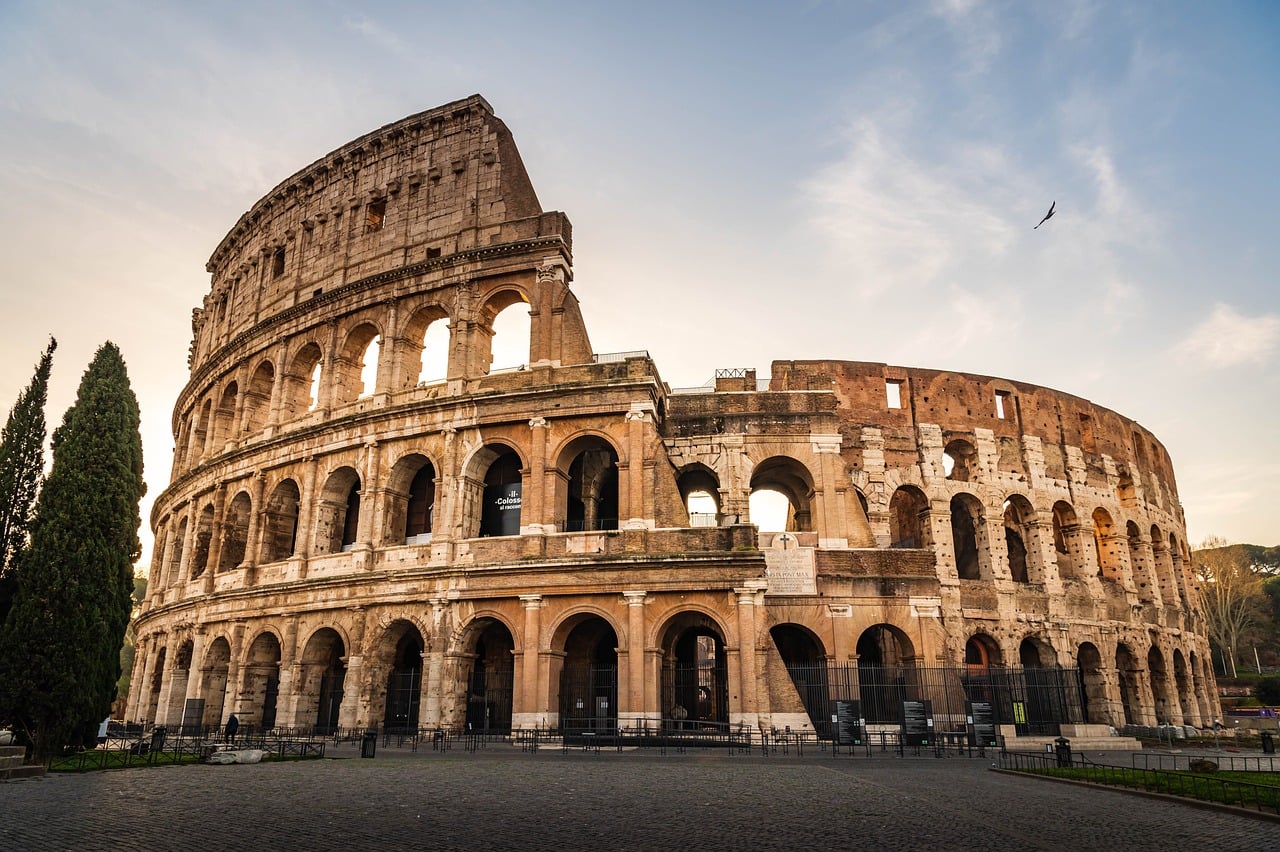
What Makes It Special: 2,800 years of history in one city
Rome may be the most famous and iconic capital in the world. Its history spans over 28 centuries, with its founding taking place in 753 BC. During ancient times, Rome’s population peaked around 1 million people—crazy to think a city was so advanced it could support so many people during that time.
The Colosseum is the largest amphitheater built at its time and could hold anywhere from 50 to 80,000 spectators. The Trevi Fountain, completed in 1762, is a Baroque-style masterpiece (visit early to avoid crowds).
Skip the lines: Book skip-the-line tickets for major attractions. Your feet will thank you.
10. Tallinn, Estonia

What Makes It Special: Medieval meets tech startup
Tallinn received its city rights in 1248, and during medieval times, it quickly became a major trading hub due to its strategic positioning. Tallinn’s Old Town is one of Europe’s most well-preserved medieval cities.
You can take a relatively short boat ride to Helsinki, Stockholm, or even St. Petersburg, Russia. Fascinatingly, Tallinn has the highest number of startups per person than anywhere in Europe. In Christopher Nolan’s film “Tenet” have put Tallinn on the map for movie buffs, too.
Tech trivia: Skype was invented in Tallinn. The city offers free Wi-Fi in many public areas.
9. Moscow, Russia

What Makes It Special: Onion domes and Soviet architecture
Moscow is the world’s northernmost and coldest megacity, and Europe’s second most populous city with over 12.4 million residents. Saint Basil’s Cathedral, completed in 1561 under orders of Ivan the Terrible, features colorful onion-shaped domes.
Right next to the cathedral is the Moscow Kremlin, a fortified complex completed in 1495 that serves as Vladimir Putin’s official residence—Russia’s equivalent of the White House. Moscow State University is one of the most stunning buildings, reminiscent of a scene straight out of a Batman movie.
Language help: Download Google Translate’s offline Russian pack. English isn’t widely spoken outside tourist areas.
8. London, United Kingdom
 What Makes It Special: Historic meets cutting-edge in perfect harmony
London is possibly the most iconic city in the world. Everything from double-decker buses to the energy of Piccadilly Circus makes the city feel so alive.
You can check out the iconic Big Ben and walk across the bridge to see the Palace of Westminster. There’s the Tower Bridge, possibly London’s most famous bridge. You can see the stoic guards at Buckingham Palace or take a ride on the London Eye.
Money saver: Many of London’s best attractions are free—the British Museum, National Gallery, and most royal parks.
Get UK eSIM to stay connected while traveling—10GB data for just $6.90.
7. Edinburgh, Scotland

What Makes It Special: Medieval magic and literary inspiration
If you want to go back in time, Edinburgh is a must. This is where J.K. Rowling wrote her Harry Potter novels. The city features medieval architecture with intricate neoclassical buildings, cobblestone streets, and beautiful gardens.
The iconic Edinburgh Castle overlooks the city and is home to Scotland’s crown jewels. Carlton Hill offers a beautiful view of the entire city. Arthur’s Seat, located in Holyrood Park just a short walk from Edinburgh center, is an extinct volcano with an elevation of 823 feet.
Timing tip: Visit during the Edinburgh Fringe Festival (August) for world-class entertainment, but book accommodation early.
6. Amsterdam, Netherlands
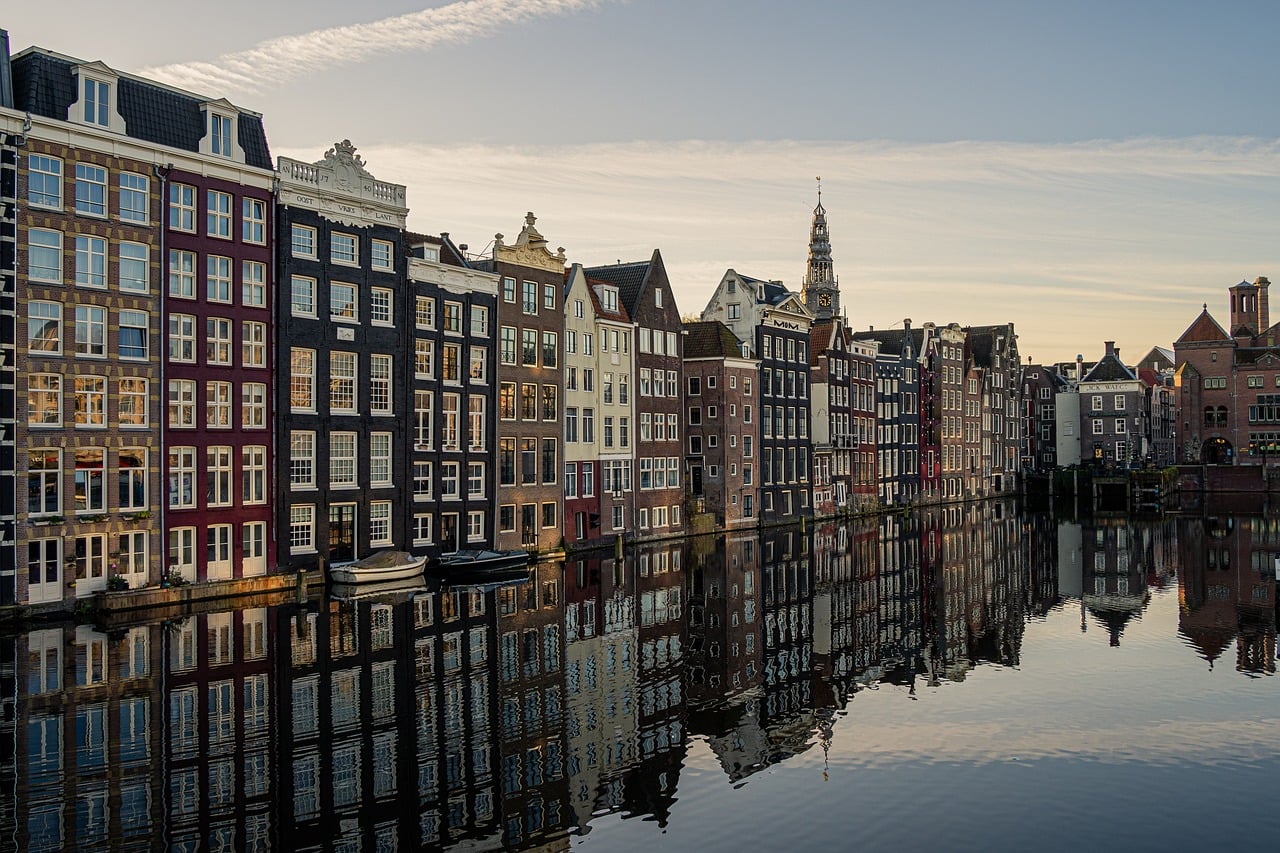
What Makes It Special: Canals, bikes, and artistic heritage
Known for its elaborate canal system, narrow houses, and countless bridges, Amsterdam originated as a small fishing village in the 12th century and rose to become one of the world’s most important trading ports in the 17th century. It’s crazy to think people were able to construct a city around canals hundreds of years ago.
The Van Gogh Museum displays some of the world’s most famous paintings, while the Rijksmuseum is another wonderful place to check out art. Walking around the canals and enjoying the atmosphere of this incredible city is an experience that’s hard to beat.
Bike life: Rent a bike—it’s how locals get around, and you’ll cover more ground than walking.
5. Budapest, Hungary

What Makes It Special: Two cities in one, split by the Danube
Located in Hungary, Budapest is one of Europe’s most photogenic destinations. The Danube River runs right through Budapest, making it a unique and stunning city. The Chain Bridge, a suspension bridge running across the Danube, first gained fame when Will Smith climbed on top of the bridge towers.
The Hungarian Parliament Building, opened in 1902, was the third-largest parliament building in the world at the time. Budapest is also famous for its thermal baths, with the Széchenyi Thermal Bath being the largest in Europe, known for its medicinal properties.
Bath etiquette: Bring flip-flops and rent a cabin for changing. Public changing areas can be awkward.
4. Prague, Czech Republic

What Makes It Special: Gothic spires and fairy-tale atmosphere
Due to its location and rich history, Prague is known as the political, cultural, and economic center of Central Europe. Prague was the capital of the Kingdom of Bohemia and the main residence of many Roman emperors, such as Charles IV.
The Charles Bridge had construction beginning in 1357 and wasn’t finished until the beginning of the 15th century. It’s decorated with an alley of over 30 statues, creating a scenic feature. Prague Castle, considered the largest ancient castle in the world, was built more than a thousand years ago in the 9th century.
Photography tip: Charles Bridge is stunning but crowded. Visit before 8 AM for crowd-free photos.
3. Berlin, Germany

What Makes It Special: Living history and modern renaissance
Today, Berlin is a thriving capital with a population of over 3.6 million people. First documented in the 13th century, it was the headquarters of Hitler’s Third Reich during World War II and became the most heavily bombed city in history. After the war, Berlin was divided into East and West Berlin, finally reuniting in 1990 with the end of the Cold War.
The Brandenburg Gate is an 18th-century neoclassical monument that serves as Germany’s national symbol of unity and peace. You can check out the Berlin Wall Memorial to see remnants of the historical wall. Berlin’s Television Tower overlooks the city and is the tallest structure in Germany.
Alternative scene: Explore neighborhoods like Friedrichshain and Prenzlauer Berg for authentic Berlin culture.
2. Lisbon, Portugal

What Makes It Special: Atlantic vibes meet ancient history
Being one of the oldest cities in the world, Lisbon is Europe’s second-oldest capital city after Athens. There’s so much culture and history in the city.
You can check out the Sanctuary of Christ the King monument (reminiscent of Rio de Janeiro and San Francisco’s bridge). The Commerce Square is another beautiful spot to explore. Parque Eduardo VII is full of beautifully designed hedges and a great place to enjoy the afternoon. The Belém Tower served as a point of embarkation for Portuguese explorers and remains an important monument.
Day trip: Sintra’s fairytale palaces are just 40 minutes away by train. Lisbon is also close to stunning beaches such as Ursa Beach.
1. Paris, France

What Makes It Special: The epitome of European elegance
Since the 17th century, Paris has been Europe’s major center of finance, diplomacy, fashion, and the arts. It’s one of the world’s most visited cities, and with all its attractions and fascinating history, it’s easy to see why.
Paris’s most recognizable attraction is the Eiffel Tower, built in 1889 for the World Fair. At 324 meters high, it was the world’s tallest man-made structure until 1930. Take the elevator up for an incredible 360 panoramic view of all of Paris.
The Louvre Museum is the world’s largest art museum and home to da Vinci’s Mona Lisa. You can also take a drive around the Arc de Triomphe or walk the grounds of the Palace of Versailles.
Local experience: Pick up fresh bread from a boulangerie, cheese from a fromagerie, and wine from a cave à vin for an impromptu picnic.
Get France eSIM to stay connected while traveling—10GB data for just $6.90.
Planning Your European Capital Adventure
When visiting multiple capitals, consider:
Rail passes: Eurail passes can save money if you’re covering multiple countries Timing: Spring (April-May) and fall (September-October) offer good weather and fewer crowds Budget: Eastern European capitals generally offer better value than Western European cities Language apps: Download offline translation apps for countries where English isn’t widely spoken
Each European capital offers something unique—medieval charm, royal grandeur, artistic inspiration, or modern innovation. Whether you’re planning a grand tour or focusing on specific regions, these 20 cities provide the perfect introduction to Europe’s diverse cultures and histories.
The best capital? It depends on what you’re seeking. History buffs might lean toward Rome or Berlin, art lovers toward Paris or Vienna, and budget travelers toward Prague or Budapest. But honestly, you can’t go wrong with any city on this list.